
“Eggs are one of nature’s perfect foods.”
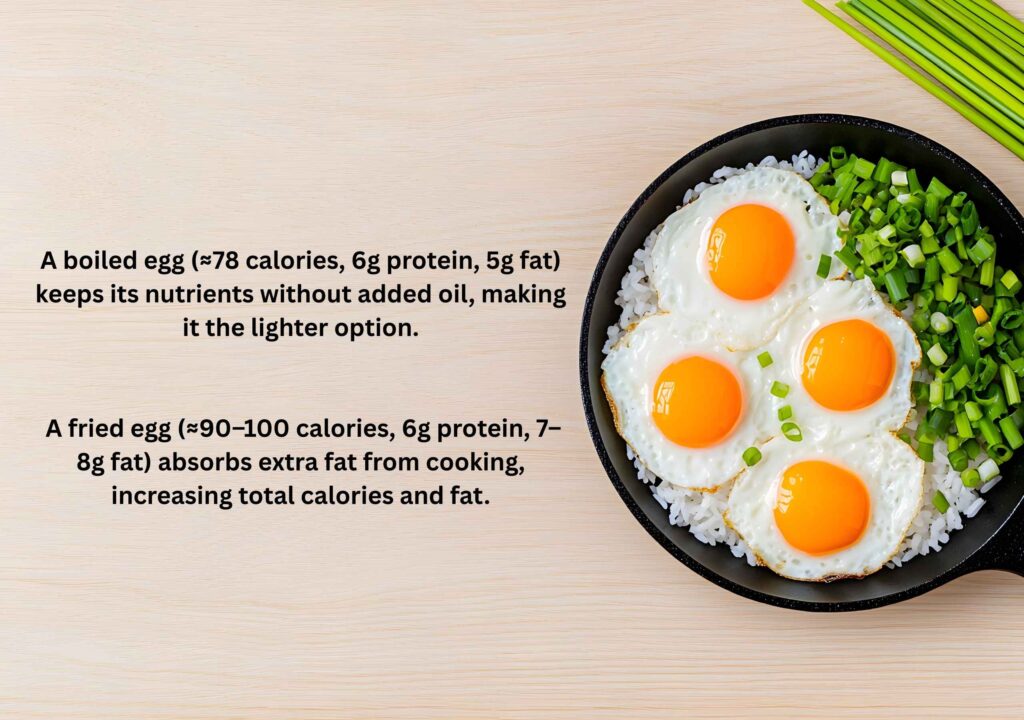
You probably eat eggs every week yet still feel confused when comparing fried egg vs boiled egg nutrition. I understand that because cooking changes calories, fat, antioxidants, and even how well your body absorbs protein. Research shows that different cooking methods can impact nutrient availability. Nutrition researchers report that frying can reduce antioxidants in eggs while boiling helps retain them. Cooking temperatures affect egg antioxidants and heat can lower some vitamin levels.
Many people search for answers about weight loss. Some want to reduce cholesterol. Others want clean protein for fitness. You might want to know which egg is easier to digest. Or which one keeps more vitamins. Or whether frying oils increase calories. So read this guide about how frying and boiling affect calories and know how oil type changes the nutrition of a fried egg and how boiling protects nutrients that support your brain and eyes.
Fried Egg vs Boiled Egg Nutrition Comparison
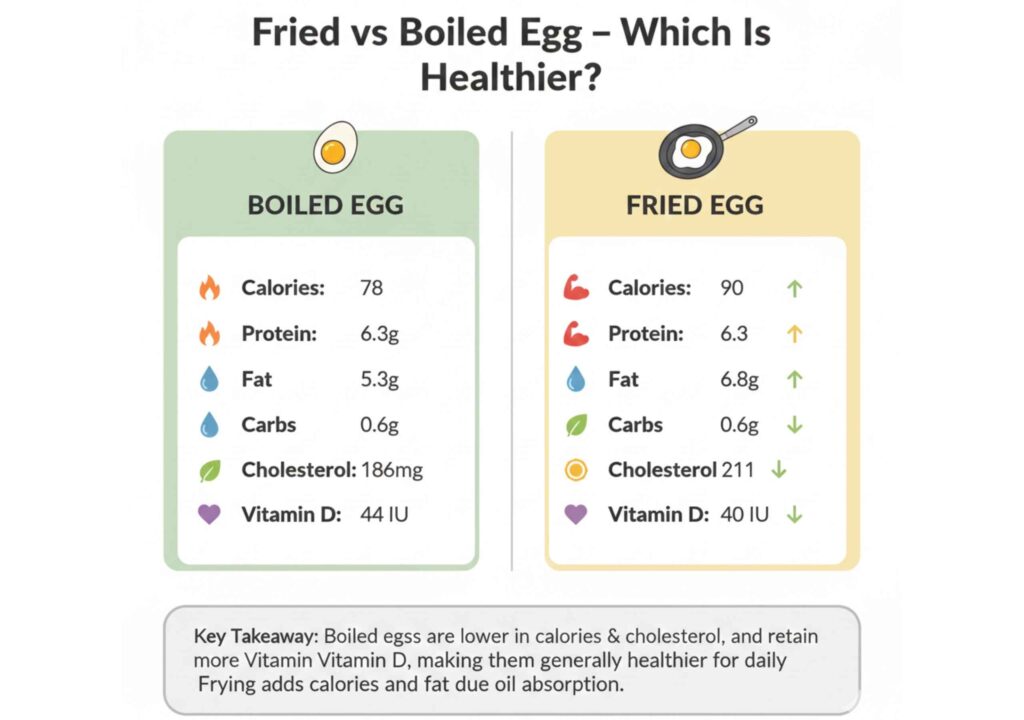
Boiled eggs give steady nutrition without added calories. Fried eggs depend on the oil and cooking temperature. Here is a clear summary of boiled egg vs fried egg calories, protein, fat, and vitamins comparison based on cooking methods.
| Nutrient | Boiled Egg | Fried Egg |
| Calories | Around 78 per large egg | 90 to 120 depending on oil |
| Protein | Around 6.3g | Same 6.3g because protein does not change |
| Fat | Around 5g natural fat | 7g to 12g depending on absorbed oil |
| Added Oil | None | Oil or butter increases calories and fat |
| Vitamins | More stable due to lower heat | Some antioxidants and heat-sensitive vitamins reduce |
| Minerals | Remain stable | Remain stable |
Difference Between a Fried Egg and a Boiled Egg?
- Boiling uses water and gentle heat. Frying uses a pan and higher heat. So the nutrient profile changes because heat and oil affect the egg’s fat content.
- Egg Nutrient Retention: Protein stays the same. Minerals stay stable. Heat-sensitive vitamins like vitamin A and antioxidants change when the egg meets high pan temperatures. Frying reduces antioxidants because direct high heat causes oxidation. Boiling keeps nutrients stable because the egg cooks at a lower temperature.
- Frying also affects some vitamins. Heat breaks down lutein and zeaxanthin which support eye health. These nutrients decline when exposed to high temperatures.
- Boiling eggs preserve more vitamins and protect folate and vitamin A. Boiling does not add extra fat. Boiling also makes the egg easier to digest for some people. So boiled eggs help people with weight loss goals or heart health concerns.
Fried Egg or Boiled Egg Calories Comparison
A fried egg has more calories because of oil addition as compared to a boiled egg. A large boiled egg has around 78 calories. A fried egg often jumps over 90 calories and can reach 120. The oil increases this number.
Eggs absorb oil while cooking. A single fried egg can absorb half a tablespoon of oil depending on the pan and heat. That alone adds about 50 extra calories. Oil choice changes the calorie count because each oil has a different fat density.
- Olive oil: 95 to 110 calories
- Butter: 100 to 120 calories
- Vegetable oil: 100 to 115 calories
Boiled eggs always have fewer calories because they cook without oil. You only get the egg’s natural calories. This makes them better for weight loss and heart-focused diets.
Fried Egg or Boiled Egg Protein Comparison
- The protein content stays the same in both eggs. A large egg still gives around 6.3 grams of complete protein. You only see changes in the structure of the protein because heat denatures it. Denaturation does not reduce protein. The amino acids stay intact. The body still uses them for muscle repair and growth. It only changes its shape to make digestion easier.
- Eggs have one of the highest protein bioavailability scores. Your body absorbs more than 90% of the protein. Frying increases digestibility because heat unfolds the proteins. Boiling does the same. So both eggs support muscle recovery and muscle repair.
- Both boiled and fried eggs work for muscle gain. The difference comes from extra calories. Fried eggs give more calories because of oil. Extra calories help if you try to gain muscle mass. Boiled eggs help if you want lean muscle without extra fat. Choose based on your goal.
- Boiled eggs fit better if you want clean protein with controlled calories. Fried eggs fit better if you want more energy with your protein. Many bodybuilders mix both because it balances calories and nutrients.
- Boiled eggs support muscle recovery because they give protein without fat that slows digestion. The body absorbs protein faster when fat stays low. This helps muscle repair after training. You can still eat fried eggs but they sit heavier in the stomach for some people.
Cholesterol & Heart Health: Fried Egg vs Boiled Egg Cholesterol Breakdown
Eggs contain natural cholesterol but they also contain healthy nutrients that support heart health. The type of cooking method changes their effect.
One large egg contains around 186 mg of cholesterol. Most of it sits in the yolk. Eggs support good HDL cholesterol which helps remove LDL from the bloodstream.
The egg’s own cholesterol stays the same upon frying. The problem starts when high heat oxidizes the cholesterol. Oxidized cholesterol can harm heart health if eaten in large amounts. High pan temperatures increase oxidation so fried eggs carry higher risk.
Frying exposes the yolk to direct heat which increases oxidation. Boiling avoids this because water keeps the temperature lower and stable.
Boiled egg is better for heart health as it avoids added saturated fat and oxidation. This makes them a safer choice for people with heart disease or high cholesterol.
Frying egg in butter or ghee increases saturated fat. Saturated fat raises LDL. Frying in vegetable oil can create harmful compounds when the oil hits high heat. So fried eggs carry more risk than boiled eggs. Boiled eggs avoid all these problems.
Impact of Butter, Ghee, and Oils
- Butter: Adds saturated fat and raises LDL.
- Ghee: More stable but high in saturated fat.
- Olive oil: Better for the heart but still adds calories.
- Vegetable oil: Breaks down fast and creates harmful oxidation at high heat.
Do Fried Eggs Have More Fat?
Fat content changes the moment you fry an egg. The egg absorbs oil from the pan. This adds calories and changes the fat profile.
A boiled egg has around 5 grams of natural fat. A fried egg absorbs extra oil. This can raise the fat to 7 grams or even 12 grams. The exact number depends on the oil and temperature. Choose oils that stay stable at medium heat.
- Olive oil: Offers healthy fats but burns fast at high heat.
- Avocado oil: Has a high smoke point and stays stable.
- Butter: Adds flavor but increases saturated fat.
- Ghee: Handles heat well but still high in saturated fat.
Oil breaks down when it hits its smoke point. This creates harmful oxidized compounds. These compounds harm heart health. Avocado oil stays stable at high heat. Olive oil stays stable at medium heat. Butter burns fast which increases oxidation.
Oil adds about 40 to 50 calories per half tablespoon. So a fried egg cooked in a thin layer of oil carries more calories than a boiled egg. This increases energy intake and affects weight loss goals.
Air-fried eggs use little or no oil. This keeps calories low. It also reduces oxidation because air fryers use controlled heat. This makes air-fried eggs a strong middle option for people who want the taste of fried eggs without extra fat.
Weight Loss Comparison: Fried Egg or Boiled Egg?
Boiled eggs support weight loss because they give protein with low calories. Fried eggs add extra oil which pushes you out of calorie deficit.
Boiled eggs have low caloric density. This means you get more nutrition for fewer calories. Low caloric density foods help you stay full and lose fat. Fried eggs carry more calories because of added fat.
Boiled eggs appear in most structured weight loss diets. They fit into calorie deficit easily. They also provide steady energy without spikes in blood sugar.
Fried eggs make calorie control harder. One fried egg can add 30 to 50 extra calories. This adds up across meals. You can eat fried eggs in moderation but boiled eggs work better for consistent fat loss.
Boiled eggs score higher on satiety because they give protein and fat without extra oil. Fried eggs taste richer but they digest faster due to added fat.
Digestibility & Gut Health: Are Boiled Eggs Easier to Digest?
Digestion plays a major role in choosing between fried and boiled eggs.
Boiled eggs digest easier because they do not contain added oil. The body breaks them down in a steady way. Boiled eggs suit people with sensitive stomachs or acid reflux.
Fried eggs sit heavier because of the oil. The body needs more time to process the fat. This can lead to bloating or discomfort in some people.
Boiled eggs support gut health because they offer simple digestion. They also avoid the oxidative compounds created during frying. These compounds irritate the gut in sensitive people.
People with acid reflux, gallbladder issues, high cholesterol issues should avoid fried eggs. People who follow strict weight loss diets should also avoid it. These groups do better with boiled eggs.
Vitamin & Antioxidant Retention
Boiling preserves most B12 and vitamin D. These vitamins are heat-sensitive but water-based cooking keeps them stable. A large boiled egg retains over 90% of vitamin B12. Vitamin D also stays mostly intact. Lutein and zeaxanthin protect your eyes. Frying at high temperatures can reduce them by up to 20%. Boiling keeps them almost intact. Frying can oxidize omega-3s, reducing their benefits. Boiled eggs preserve omega-3s fully. Boiled eggs are better if you want maximum antioxidants. For a deeper look into every vitamin and antioxidant found in eggs, check out full egg nutrition facts guide.
Antioxidants: Fried Egg vs Boiled Egg
| Nutrient | Boiled Egg | Fried Egg |
| Lutein | High retention | Reduced by 15-20% |
| Zeaxanthin | High retention | Reduced by 10-15% |
| Antioxidants overall | Preserved | Slightly reduced |
Keto, Diabetics, Bodybuilding & Low-Cholesterol Diets
- Keto Diet: Fried eggs are fine for keto because of the fat content. Boiled eggs are perfect for keto-friendly meal prep. They give protein without extra carbs. If you follow keto, grab my Free Keto Diet Plan PDF, a complete 30-day printable meal plan to simplify your routine.
- Diabetes: Boiled eggs are safe for diabetics. They do not spike blood sugar. Fried eggs are okay if you use healthy oil and limit added fat. Avoid excessive butter or ghee.
- Bodybuilding: Both eggs support muscle gain. Boiled eggs give clean protein. Fried eggs give extra calories for energy. Protein absorption is similar. Boiled eggs post-workout digest faster.
- Low-Cholesterol Diet: Boiled eggs are better for lowering LDL. Fried eggs in butter or ghee add saturated fat. Low-fat options like boiling or air-frying are safer for heart health.
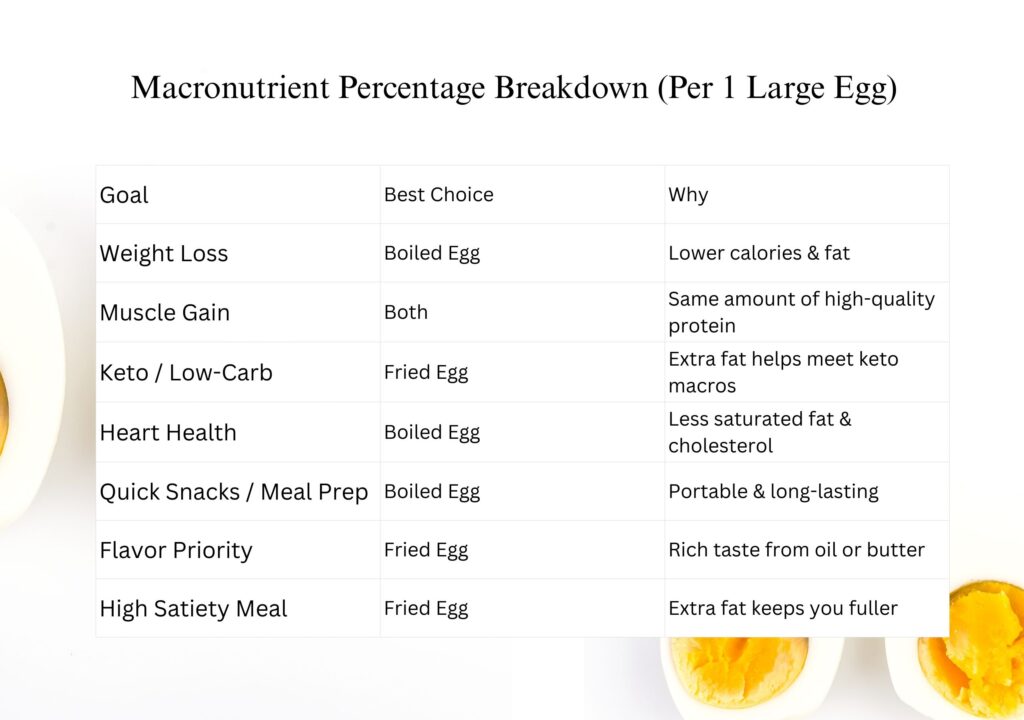
Which Egg Should You Eat: Fried or Boiled Egg?
| Goal | Best Choice | Reason |
| Weight Loss | Boiled Egg | Low calories, high protein, satiety |
| Muscle Gain | Boiled or Fried | Boiled for clean protein, fried for extra energy |
| Heart Health | Boiled Egg | Avoids oxidation and extra saturated fat |
| Diabetes | Boiled Egg | Stable blood sugar, low fat |
| General Nutrition | Boiled Egg | Preserves vitamins and antioxidants |
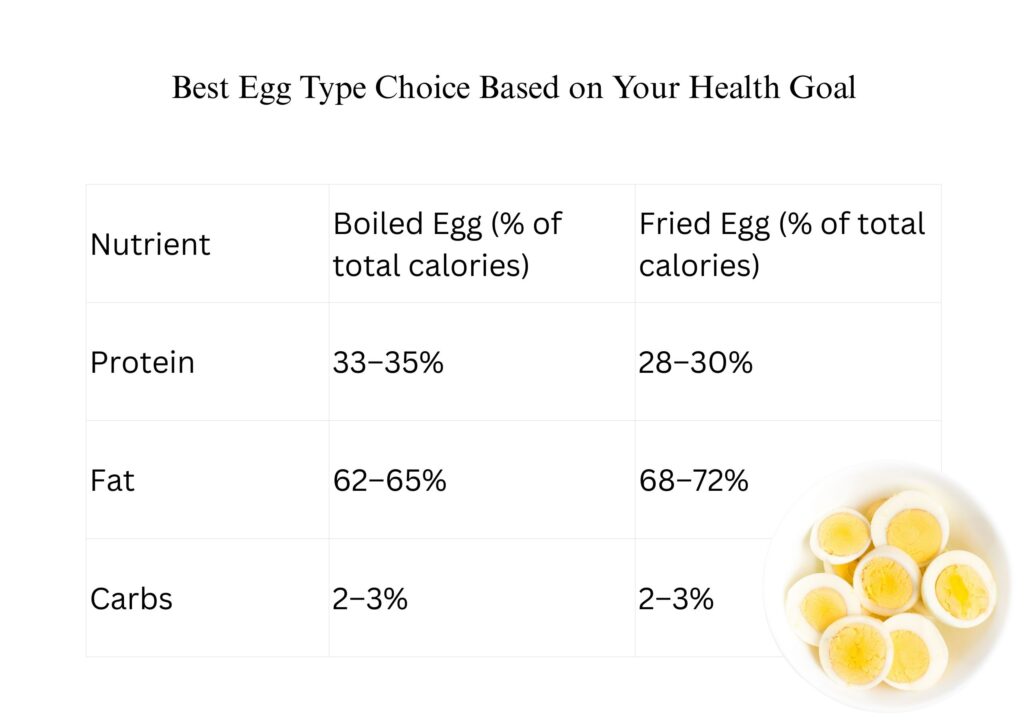
Boiled eggs win in most cases. Fried eggs are okay occasionally if you use healthy oil.
Final words
After exploring every detail, one thing is clear. Boiled eggs are the more nutritious choice for most people. They retain vitamins, antioxidants, and protein. They are lower in calories and fat. They are easier to digest. They support weight loss, heart health, and daily nutrition.
Fried eggs are tasty and provide extra energy. They work well if you need more calories or enjoy richer flavors. Choosing the right oil and cooking at lower heat makes them healthier.
Final Advice: If your goal is health, fitness, or weight control, boiled eggs should be your daily go-to. If you want occasional indulgence or need extra calories, enjoy fried eggs in moderation. Remember, both eggs are nutrient-dense and can fit into a balanced diet. Make your choice based on your goals and lifestyle.