

You probably eat eggs every week. Maybe scrambled for breakfast or boiled as a quick snack. But have you ever looked closely at the egg nutrition facts behind those little shells? Behind every bite lies a compact bundle of protein, vitamins, and healthy fats that can transform your daily nutrition.
One large egg packs about 6 grams of high-quality protein and over 13 essential nutrients for only around 70 calories. Eggs are among the most nutrient-dense foods available. They deliver an impressive mix of protein, healthy fats, vitamins, and minerals that support muscle growth, brain health, and energy levels. Yet, many people still have questions about calories and cholesterol, to which part, yolk or white, holds the most nutrition.
Recent studies, including those from the American Journal of Clinical Nutrition, reveal that eating up to one egg per day is not linked to an increased risk of heart disease in healthy adults. In fact, the nutrients in eggs like choline, lutein, and vitamin D play essential roles in brain function, vision, and immune support. So instead of avoiding eggs, it’s time to understand how to include them wisely in your diet.
This blog will break down the real nutrition label for an egg, explain what makes it a complete protein, and show how cooking methods like boiling or frying can change its nutritional profile. You’ll also discover how eggs fit into weight-loss plans, muscle-building diets, and even heart-healthy lifestyles based on scientific evidence, not myths. Whether you eat them every day or occasionally, this article will help you make informed, confident, and healthier food choices.
Egg Nutrition Label: What’s Inside One Large Egg
Before we go into details, let’s look at the nutrition label for an egg. A single large egg offers an impressive balance of nutrients for very few calories.
| Nutrient | Amount (Per 1 Large Egg, ~50g) |
| Calories | 70–78 kcal |
| Protein | 6.3 g |
| Total Fat | 5 g |
| Saturated Fat | 1.6 g |
| Carbohydrates | 0.6 g |
| Cholesterol | 186 mg |
| Sodium | 62 mg |
| Vitamin A | 6% DV |
| Vitamin D | 6% DV |
| Vitamin B12 | 9% DV |
| Folate | 6% DV |
| Iron | 3% DV |
| Selenium | 28% DV |
| Choline | 147 mg |
These numbers show why eggs are considered nutrient-dense. They deliver high-quality protein, essential vitamins, and minerals in one small shell. When comparing small, medium, and large egg nutrition, the difference mainly lies in portion size.
- Small egg (38g): ~54 calories, 4.5g protein, 3.5g fat
- Medium egg (44g): ~63 calories, 5.5g protein, 4.5g fat
- Large egg (50g): ~70 calories, 6.3g protein, 5g fat
So when tracking 1 egg nutrition, size matters. Larger eggs naturally provide more calories and protein but the same excellent nutritional balance.
How Many Calories Are in One Egg?
The number of calories in one egg depends on its size and how you cook it.
- Small egg: about 54 calories
- Medium egg: about 63 calories
- Large egg: about 70–78 calories
- Extra-large egg: about 80–90 calories
But cooking methods change everything. Let’s compare:
- Boiled eggs nutrition facts: A large boiled egg has around 78 calories. No added fat makes it one of the healthiest options.
- Scrambled eggs nutrition: One large scrambled egg cooked with a small amount of milk or butter has about 90 calories.
- Fried eggs nutrition facts: A fried egg in oil or butter can reach 100–120 calories depending on the amount of fat used.
If you’re counting calories, remember, eggs themselves are light. It’s what you cook them with that adds up. Pairing them with vegetables or whole-grain toast makes a balanced and satisfying meal.
Boiled eggs are ideal for those looking for clean protein. Scrambled or fried versions are better if you want flavor and texture but should be cooked in healthy fats like olive oil or avocado oil.
Protein in Eggs: A Complete Protein Source

Eggs are one of the few foods that contain all nine essential amino acids, making them a complete protein source. This means the protein in eggs can be fully used by the body to build and repair muscle, skin, and cells. Each large egg provides about 6.3 grams of high-quality protein. Here’s a quick comparison:
- 1 egg: 6.3g protein
- 2 eggs: 12.6g protein
- 3 eggs: 18.9g protein
- 4 eggs: 25.2g protein
So if you eat two eggs scrambled, you get nearly 13 grams of protein, more than a small chicken breast. Learn a complete guide on chicken breast nutrition.
Most of the protein comes from the egg white, also called egg albumin. In fact, one egg white has about 3.6 grams of pure protein with almost no fat. That’s why many athletes use egg whites as a lean protein source. However, the yolk also contributes essential nutrients that support muscle function, including vitamin D and choline. Together, the white and yolk make eggs one of the most efficient natural protein sources available.
If you’re comparing three eggs nutrition vs two eggs scrambled, the choice depends on your protein goal. Both options support recovery, energy, and focus throughout the day.
Egg Yolk vs Egg White: Egg Nutritional Breakdown
Many people wonder which part of the egg is healthier, the yolk or the white. The truth is both have unique benefits. Let’s compare egg yolk nutrition and egg white nutrition side by side.
| Nutrient (Per 1 Large Egg) | Egg White | Egg Yolk |
| Calories | 17 kcal | 55 kcal |
| Protein | 3.6 g | 2.7 g |
| Total Fat | 0.1 g | 4.5 g |
| Cholesterol | 0 mg | 186 mg |
| Carbohydrates | 0.2 g | 0.3 g |
| Vitamin A | 0% DV | 6% DV |
| Vitamin D | 0% DV | 6% DV |
| Vitamin B12 | 0% DV | 9% DV |
| Folate | 1% DV | 6% DV |
| Iron | 0% DV | 3% DV |
| Choline | 0 mg | 147 mg |
| Selenium | 8% DV | 20% DV |
The nutritional value of 1 egg white lies mainly in its high-quality protein and zero fat. This makes it perfect for weight loss or muscle repair diets.
The yolk, however, carries most of the egg’s vitamins, minerals, and healthy fats. It contains nearly all the vitamin D, choline, B12, and antioxidants that support the brain, eyes, and heart.
If you skip the yolk, you miss half the nutrients. The best choice is to eat the whole egg for complete egg nutritional information and maximum health benefits.
Fats, Cholesterol, and Carbs in Eggs: Full Nutrition Info
Eggs often get misunderstood because of their cholesterol content. But science now shows that cholesterol in food doesn’t directly raise cholesterol in the blood for most people. Studies by the American Heart Association confirm this finding.
Each large egg has about 5 grams of fat, most of which are healthy unsaturated fats. These include monounsaturated fats and omega-3 fatty acids that protect your heart and reduce inflammation.
The nutrition facts egg chart shows that eggs are almost carb-free. One large egg contains less than 1 gram of carbohydrates, making them an excellent choice for low-carb or keto diets.
If you worry about cholesterol in eggs, here’s what to know. The body produces its own cholesterol. When you eat eggs, your liver makes less to balance levels. That’s why the nutrition of eggs is considered heart-healthy when eaten in moderation.
The egg nutritional facts reveal that the real benefit lies in balance — high protein, healthy fats, and almost no carbs.
Vitamins and Minerals in Eggs: The Hidden Egg Nutrient Goldmine
When people think of eggs, they often focus on protein. But the egg nutrition info shows that eggs are also packed with essential vitamins and minerals your body needs daily. Here’s what one large egg provides:
- Vitamin D: Supports bone strength and immune function. Eggs mainly considered as natural food sources of vitamin D.
- Vitamin B12: Helps in red blood cell production and keeps nerves healthy.
- Vitamin B2 (Riboflavin): Converts food into energy.
- Selenium: Protects cells from damage and boosts thyroid health.
- Choline: A vital nutrient for brain development, memory, and mood regulation. One egg provides over 25% of your daily needs.
- Lutein and Zeaxanthin: Two powerful antioxidants that protect your eyes from blue light and age-related vision problems.
The nutritional value of the egg proves it’s not just a breakfast food. It’s a compact nutrient package that supports your brain, eyes, skin, and metabolism.
That’s why experts call the egg in nutrition a “gold standard” food — simple, affordable, and packed with life-essential nutrients. If you’re building a diet for long-term wellness, egg and nutrition go hand in hand.
Boiled, Fried, and Scrambled Eggs: How Cooking Affects Egg Nutrition
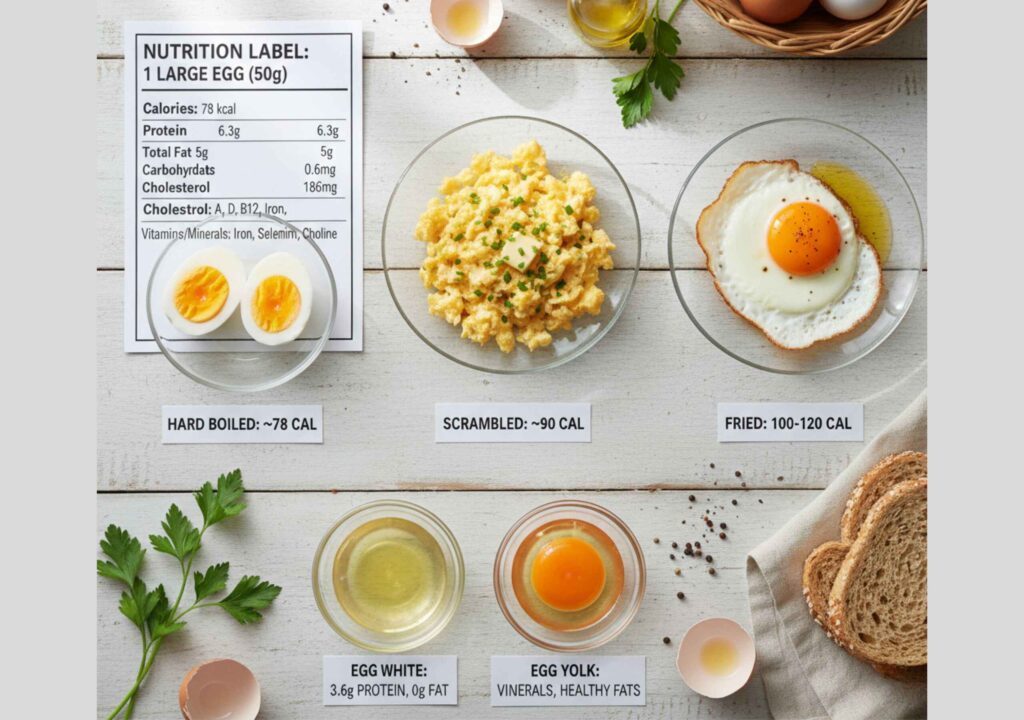
Cooking style changes how many nutrients your eggs retain. The boiled egg is often considered the best for health because boiling doesn’t require extra fat.
| Cooking Method | Calories (Per Large Egg) | Key Notes |
| Hard Boiled Egg | 78 kcal | Keeps protein intact and adds no oil. |
| Scrambled Egg | 90–100 kcal | Slight vitamin loss if overcooked. |
| Fried Egg | 100–120 kcal | Higher fat due to added oil or butter. |
The hard boiled eggs nutrition stays close to raw eggs because no extra ingredients are added. Boiling also preserves most B vitamins and minerals.
In contrast, frying increases calories but enhances flavor. Using healthy oils like olive or avocado oil helps maintain good fats while limiting trans fats.
Scrambled eggs nutrition facts show that adding milk or butter can raise calories slightly but keep protein quality high. If you want the best nutrient retention, lightly boil or poach your eggs. It preserves vitamin D, B12, and choline better than high-heat methods.
In short, every cooking style has its benefits. Choose boiled egg for clean eating, fried egg for energy-dense meals, and scrambled eggs for balance and taste.
Omega-3, Free-Range, and Organic Eggs: Comparing Egg Nutrition Facts
Not all eggs are the same. The eggs nutritional information changes depending on how the hens are raised and what they eat.
- Conventional eggs come from hens fed mainly grains. They have good protein and vitamin content but lower omega-3 levels.
- Omega-3 enriched eggs come from hens fed flaxseeds or fish oil. These eggs contain two to three times more omega-3 fatty acids, which support heart and brain health.
- Free-range and organic eggs usually have brighter yolks because hens eat natural plants and insects. They often contain higher vitamin D, vitamin E, and beta-carotene.
Here’s a quick egg nutrition chart comparison per large egg:
| Type of Egg | Omega-3 (mg) | Vitamin D (IU) | Color/Texture |
| Conventional | 30–50 | 40 | Pale yellow yolk |
| Omega-3 Enriched | 150–250 | 80 | Deep yellow yolk |
| Free-Range | 70–120 | 100 | Dark golden yolk |
The nutritional value of eggs improves when hens have outdoor access and a natural diet. If you’re looking for more heart-healthy fats and nutrients, choose omega-3 or free-range eggs.
How Many Eggs Can You Eat Per Day or Week?
One of the most asked questions about nutrition egg is how many are safe to eat daily. The answer depends on your health, diet, and goals.
- Healthy adults: Studies show that eating up to one whole egg per day fits within a balanced diet. It supports nutrient intake without raising heart disease risk.
- Athletes: Because of high protein needs, athletes can safely eat 2 to 4 eggs per day to support muscle repair and recovery.
- Pregnant women: Two eggs daily are safe and helpful for choline and protein. Choline supports fetal brain development.
- Elderly adults: One or two eggs a day can maintain muscle and improve vitamin D intake.
- High cholesterol or heart patients: New research suggests that 6–7 eggs per week are safe if your overall diet is low in saturated fats.
So, when thinking about egg nutritio, remember moderation matters more than strict limits. Eggs are nutrient-dense, and your body benefits most when you combine them with fruits, vegetables, and whole grains.
Are Eggs Good for Weight Loss and Muscle Growth?
Yes, absolutely. Eggs are one of the most filling foods you can eat. The high-quality protein keeps you full for hours and helps reduce calorie intake throughout the day.
Eating eggs for breakfast can increase satiety and reduce cravings later. For muscle growth, eggs deliver complete protein with all essential amino acids needed for repair and strength.
Here’s a simple look at 2 eggs nutrition info and 4 eggs nutrition to guide your daily intake:
| Egg Quantity | Calories | Protein | Fat |
| 1 Large Egg | 70 | 6 g | 5 g |
| 2 Eggs | 140 | 12 g | 10 g |
| 4 Eggs | 280 | 24 g | 20 g |
Including 2–4 eggs per day in your meal plan helps balance your protein and calorie needs, especially when combined with exercise.
Eggs and Popular Diets (Keto, Paleo, Low-Carb, Vegetarian)
Eggs are one of the most versatile foods for modern diets. In keto, paleo, and low-carb plans, they are a cornerstone because they offer protein and healthy fats with almost zero carbs.
- Keto diet: Eggs are ideal because they support fat metabolism and provide steady energy without spiking blood sugar. Read the depth keto diet plan for more information.
- Paleo diet: They fit perfectly since they are a natural whole food rich in essential nutrients. You can use other healthy food options to maintain Paleo diet plan.
- Low-carb diet: Eggs keep you full while maintaining muscle during calorie restriction.
If you follow a vegetarian diet, eggs can be your primary source of complete protein and choline. They fill the nutritional gaps often left by plant-based meals.
Eggs for Brain, Heart, and Eye Health
Eggs are more than just a breakfast food. They are a complete brain and heart-supporting food. Eggs contain choline, omega-3 fats, lutein, and zeaxanthin, all of which support vital organ functions.
Choline plays a big role in memory and learning. One large egg provides about 147 mg of choline, which supports the brain’s communication system. Regular intake helps improve focus and concentration in both adults and children.
Omega-3 fatty acids in eggs support heart health. They reduce inflammation and help maintain balanced cholesterol levels. People who include omega-3 enriched eggs in their diets often have better heart markers.
Lutein and zeaxanthin are antioxidants that protect the eyes from UV damage and age-related vision loss. These compounds are concentrated in the egg yolk and help maintain clear vision as you age.
The nutritional value of the egg proves that this simple food protects your heart, strengthens your mind, and safeguards your vision, three systems that define long-term health.
Eggs Nutrition Facts for Kids, Pregnant Women & Seniors
The nutrition in eggs makes them suitable for every stage of life. Each group benefits from different nutrients present in a single egg.
For children, the egg nutritional facts highlight protein and choline as key nutrients. Protein builds muscle and supports growth. Choline helps in brain development and improves attention span. A boiled egg in a child’s breakfast gives a solid nutritional start to their day.
For pregnant women, eggs are a natural source of choline and folate, two nutrients that work together for healthy fetal brain and spinal development. Eating one or two eggs daily supports maternal energy and reduces nutrient deficiencies.
For seniors, eggs offer easy-to-digest protein and vitamin D, which keeps bones strong and reduces muscle loss. Regular consumption also helps maintain balance and mobility in older adults.
Egg Allergies, Intolerance & Substitutes
Some people cannot eat eggs due to allergies or intolerance. Knowing the difference is important. An egg allergy causes the immune system to react to proteins in the egg. Symptoms may include hives, coughing, or stomach discomfort. An intolerance is less severe and mainly affects digestion.
If you have either, safe cooking methods and alternatives can help. Baking or cooking eggs fully reduces allergic reactions for some people because heat changes the protein structure.
For those avoiding eggs completely, several substitutes mimic their nutrients. Tofu scrambled with turmeric offers protein and iron. A flaxseed and water mix can replace eggs in baking and provides healthy omega-3 fats. Fortified plant milk adds vitamin D and calcium.
Storage, Safety, and How to Tell If an Egg Has Gone Bad
Knowing how to handle eggs safely protects you from foodborne illness. According to the FDA, eggs should be refrigerated at or below 4°C (40°F) to keep bacteria from multiplying. Always store them in their original carton to avoid absorbing odors.
To test freshness, try the float test. Place an egg in a bowl of water. If it sinks and stays flat, it’s fresh. If it stands upright or floats, it’s old and should be discarded.
Hard-boiled eggs last about one week in the fridge, while raw eggs in the shell last three to five weeks.
The egg nutrition remains the same as long as the egg stays fresh. Once spoiled, both taste and nutritional content of boiled eggs begin to decline.
Boiled eggs maintain full protein and vitamin content when stored properly. Always refrigerate within two hours of cooking to preserve safety and nutritional quality.
Frequently Asked Questions About Egg Nutrition Facts
What are the calories in one egg?
A large egg has about 70 calories. Most of the calories come from the yolk because it holds the fat and vitamins. The egg white has around 17 calories and is almost pure protein.
How much protein is in an egg?
One large egg provides about 6 to 7 grams of high-quality protein. The protein is split almost evenly between the yolk and white. This makes eggs one of the best sources of complete protein that supports muscle repair and growth.
Which part of the egg has more nutrients, yolk or white?
The yolk has more nutrients. It contains vitamins A, D, E, K, and B12 along with healthy fats and minerals like zinc and selenium. The white is rich in pure protein but lacks most vitamins. Eating the whole egg gives the full egg nutritional value.
How much cholesterol is in one egg?
One large egg yolk has about 186 mg of cholesterol. New research shows dietary cholesterol from eggs has little effect on blood cholesterol for most people. Moderation is still key especially for those with heart conditions.
Are eggs good for weight loss?
Yes. Eggs are low in calories and high in protein which keeps you full longer. Eating eggs for breakfast can reduce calorie intake later in the day. Their protein helps preserve lean muscle while burning fat.
How do cooking methods affect egg nutrition?
Cooking changes texture and digestibility but nutrients remain similar. Boiled or poached eggs retain the most nutrients since they need no oil. Frying adds extra fat while overcooking can lower antioxidant levels like lutein. Always cook eggs well to avoid bacteria.
Are eggs safe for people with high cholesterol?
Most people can safely eat one to two eggs a day. The cholesterol in eggs doesn’t raise LDL (“bad”) cholesterol in healthy people. However those with diabetes or heart disease should consult a doctor about portion limits.
How many eggs can I eat per day?
For healthy adults one to two eggs daily fits well into a balanced diet. Athletes and active people may eat more depending on protein needs. The key is balance and variety in your diet.
Are eggs good for brain health?
Yes. Eggs contain choline, a nutrient that builds brain cell membranes and supports memory and learning. Regular intake improves focus and may reduce cognitive decline with age. This makes eggs a smart food choice for students and seniors alike.
Do eggs fit into the keto or paleo diet?
Absolutely. Eggs are low in carbs and high in fat and protein which fits both keto and paleo diets. They also provide vital nutrients like vitamin D and B vitamins that many low-carb eaters lack.
What are the benefits of eating whole eggs vs egg whites?
Whole eggs deliver complete nutrition with protein, fats, and vitamins. Egg whites alone give pure protein but lack key nutrients like choline, vitamin D, and iron. Eating whole eggs offers better nutrition value of eggs for overall health.
Are eggs allergy-safe or what are substitutes?
Egg allergies are more common in children and usually fade with age. Symptoms include skin rashes, stomach upset, or breathing issues. For substitutes use tofu, flaxseed mix, or chia seeds. These provide protein and healthy fats similar to eggs.
What are the nutrition facts of an egg?
One large egg offers about 70 calories, 6g protein, 5g fat, less than 1g carbs, and 186mg cholesterol. It also includes vitamins A, D, E, B12, riboflavin, and selenium. This balance makes eggs a complete food source.
What are the nutrition facts of a boiled egg?
A large boiled egg keeps the same nutrition: 70 calories, 6g protein, and 5g fat. Boiling protects nutrients and avoids added fats from frying. It’s one of the healthiest ways to eat eggs. A hard-boiled egg gives nearly the same nutrition as a soft-boiled one. It provides 70 calories, 6g protein, and essential micronutrients. The difference is only in texture, not nutrient value.
What are the nutrition facts of scrambled eggs?
Scrambled eggs vary depending on ingredients. Plain scrambled eggs from two large eggs have about 140 calories and 12g protein. If cooked in butter or milk, calories and fat increase. Use minimal oil for a lighter meal.
Are eggs from fast-food items healthy?
Packaged foods like breakfast burritos or bagels often use processed eggs high in sodium and fat. They don’t match the egg nutritional information of fresh eggs. Choose homemade eggs for better control over ingredients.
What nutrients are in the egg yolk?
The yolk is nutrient-dense. It contains choline, folate, vitamin D, vitamin A, B12, and healthy fats. It also carries antioxidants lutein and zeaxanthin that protect eyes and brain.
Final Words
Eggs are one of the simplest yet most powerful foods you can add to your meals. They deliver steady energy, high-quality protein, and nutrients your body actually uses. They support your brain, heart, and eyes and fit into nearly every eating style.
You don’t need fancy supplements when real food like eggs can do so much. They help you recover after workouts and keep you full when you are trying to lose weight. They make a quick breakfast or a satisfying snack any time of day.
If you care about clean nutrition, start with fresh eggs. Keep them cooked safely and stored right. Choose local or organic when you can. The goal is not perfection but consistency.
Make eggs part of your weekly plan. Mix them into salads or pair them with vegetables and whole grains. Let them be the protein that balances your plate.
Your body runs better when you feed it smart. Eggs prove that healthy food can be simple, affordable and full of value. Keep them in your kitchen and you’ll always have a reliable start to a healthy day.